Working with Compulsive Control in Psychotherapy
What happens when our need to help becomes a need for the client to change?
Most therapists know the experience.
You work harder than your client.
You offer reassurance that fails to reassure.
You explain something again, hoping this time it will land.
You leave a session frustrated, worried, or feeling that you have somehow failed.
You want to help. But somewhere along the way, helping has become tangled with something else: your own need to feel competent, useful, or less helpless.
Monkeytraps for Therapists explores that common entanglement and its connection to the problems our clients bring into the room.
The trap
A physical monkeytrap works because the monkey cannot let go of what it wants.
Psychological monkeytraps work in much the same way. They lure us into trying to control what is not ours to control, and end up perpetuating the very problems we are trying to solve.
People-pleasing promises protection from rejection. Perfectionism promises protection from criticism. Worry promises protection from uncertainty. Rescuing promises relief from the discomfort of watching someone struggle.
Each can bring temporary relief. That relief makes the strategy harder to relinquish, even as its costs accumulate.
Therapists are vulnerable to the same process. A client’s need to be rescued can meet our need to rescue. A demand for certainty can meet our need to have an answer. Two people trying to escape discomfort can find themselves keeping each other stuck.
Inside the book
Part I: Monkeytraps presents thirteen clinical narratives which explore compulsive control in forms ranging from worry and avoidance to overfunctioning, self-criticism, and the search for certainty. The clients are composites drawn from actual practice.
Part II: Monkeytraps in Theory, Practice and the Therapist outlines the model’s theoretical foundations, its clinical uses and limitations, and connects the clinical stories to formulation and intervention.
Part III: The Therapist’s Monkeytraps shows how clinicians, too, can get caught up in compulsive controlling. Drawing on my own history and practice, I examine the urge to rescue, the need to produce improvement, and the illusion that our closeness to clients can satisfy our own need for intimacy.
Throughout, the book returns to two important questions facing therapists:
What am I trying to control here? And what discomfort am I trying to escape by controlling it?
Who it’s for
I wrote this book for therapists who recognize these struggles in their clients and are willing to recognize them in themselves.
It offers a way to identify the control strategies beneath apparently different problems, notice when client and therapist become caught in a shared pattern, and explore alternatives to trying harder at what isn’t working.
This is not a treatment manual, but a framework that can be used alongside your existing therapeutic approach. Its purpose is to help you see more clearly what is happening in the room, including what is happening in your own chair.
Follow the book’s progress
The manuscript is complete; I am currently seeking a publisher.
If you’d like to hear about publication news, or inquire about the manuscript, please get in touch.

Read the Introduction
Once upon a time there was an alcoholic.
And the alcoholic had a wife.
And the wife was terrified of her husband’s alcoholism.
Because when he drank, her husband got sullen, then angry, then loud, and then violent.
And this never ended well for the wife.
So she set out to manage her husband’s drinking in every way she could.
She replaced his whiskey with vodka, then diluted the vodka with water.
She poured out bottles in the kitchen sink.
She begged him to go to AA.
She threatened divorce if he didn’t.
She told his boss that his hangovers were really a 24-hour flu.
She told neighbors that her black eye came from walking into a door.
She told friends she couldn’t leave, because she loved him.
She did other things too, which I won’t list here, since they’re the sort of things with which most therapists are familiar.
Familiar, at least, to those of us who work with what are now called codependents.
Codependency
Codependency is a term we tend to use without stopping to define it.
I remember trying to define it myself, years ago, in preparation for a public talk.
I remember looking through books on the subject, and finding different definitions in each one.
And I remember going in and reading all those definitions to the audience at my talk.
After which a man in the back row raises his hand to ask a question.
“So what the hell is codependency?” he asks.
Everyone laughs.
I laugh too. While inside thinking Shoot me now.
And then I have a thought. Simple, spontaneous, and new to me.
“Addiction to control,” I tell him.
I have surprised myself. I’ve never thought of it this way before.
“What do you mean?” asks the man.
And I find I have an answer for him.
I explain that I see codependents as traumatized people convinced that safety and survival depend on controlling the alcoholic. So they do things like hide booze and avoid Dad at certain times of day and lie to family members about the extent of his drinking. And from these experiences they come to see control as a way of coping generally, and unconsciously start to apply it to all situations and relationships.
“I’m not like that,” says the man in the back row. “Mom’s alcoholic, but I’m not controlling.”
“Okay,” I say. “Let me ask you something. The opposite of controlling, in the sense I’m using the word, is being able to relax, and do nothing, and trust that everything will work out just fine anyway. How often can you do that?”
He grunts. “Never.”
And other people in the room are nodding.
And I realize I’m onto something.
Pictures
After the talk I go back to practicing therapy with my current caseload of clients.
And something weird happens.
Have you ever bought a new car — say, a Subaru — and gone for a drive, and suddenly the traffic is full of Subarus?
That’s what happens to me.
Suddenly my caseload is full of control addicts.
They haven’t changed, of course.
I have.
Suddenly I’m noticing how important control is to them.
How, in fact, they can’t stop controlling.
I should pause to define my terms here. By control I mean the ability to dictate reality — to make people, places and things behave as we want them to. To edit situations, outcomes, and feelings in ways that meet our needs, satisfy our preferences, and fit our comfort zone.
It works like this: Moment to moment, we each carry in our heads a picture of the reality we’d prefer. And we constantly compare that picture to the reality we have. Anything we do to make those pictures match is what I call controlling.
We do this constantly, waking and sleeping, consciously and unconsciously, creatively and destructively, from birth until death.
In fact, we cannot not do it.
The urge to control is part of our wiring.
Nor is this urge inherently unhealthy.
Often it is necessary or life-enhancing. I don’t want to give up control when I’m driving, or when my kid gets sick, or if raccoons invade my attic. I’m controlling when I mow my lawn, balance my checkbook, salt my eggs, swat a mosquito, or decide which movie to watch on TV.
Control becomes a problem, though, when I try to apply it to things I can’t or shouldn’t control.
Monkeytraps
Early in my research on control I came across a metaphor which summarizes how control functions as pathology.
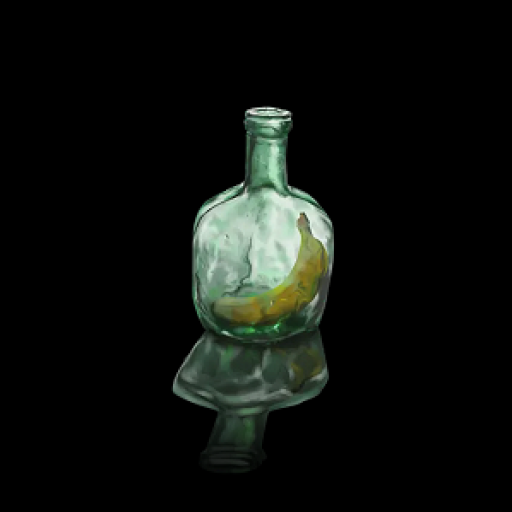
In some parts of the world, I read, they trap monkeys using a simple device. A banana is placed inside a weighted bottle with a narrow neck, which is placed under a monkey tree. The monkey comes along, smells the banana and reaches in to grab it, only to find that the neck is too small to allow it to withdraw its fist. It could free itself easily; it has only to let go. But it really really wants that banana. So it holds on. And it keeps holding on until the trapper comes to collect it.
Human beings do something much like that.
When we are uncomfortable, we naturally reach for relief. Relief is our banana.
But much of life is beyond our control, and circumstances often frustrate our attempts to control them.
And the more we rely on control to achieve safety and security, the more stuck we become.
Like the monkey.
And the alcoholic’s wife.
Control addiction
I should clarify that what I mean by control addiction is not an addiction in the same sense as substance abuse.
I mean a learned, self-reinforcing mode of anxiety regulation that gradually narrows a person’s choices and impairs contact.
Control addicts rely on behaviors that try to manage distress or uncertainty in ways that become negatively reinforcing. In other words, they get temporary relief, as one does when one scratches a poison ivy rash. But as with scratching, the relief lasts just so long. So the scratcher scratches again, and the control addict compulsively repeats the behavior. And both the rash and the distressed state get worse.
This book
What follows is written for therapists interested in applying this view to their work.
It has three parts:
Part I: Monkeytraps is a collection of vignettes containing reframings and interventions meant to show how the idea of control addiction can be used in sessions.
Part II: Monkeytraps in Theory, Practice and the Therapist outlines how what I call control addiction relates to and echoes related concepts in the existing psychotherapeutic literature.
Part III: The Therapist’s Monkeytraps explores how clinicians, too, can be caught up in compulsive controlling, and how our monkeytraps and our clients’ monkeytraps can interlock.
Think of it not as a treatment manual, but as an invitation to start a new sort of conversation with your clients and the problems they bring to therapy.
It may fit well or not so well with how you work now.
As they say in Al-Anon, take what you like and leave the rest.
But I can say with confidence that control issues are there to be found, again and again, in the problems clients bring to therapy.
And I suspect that therapists who find ways to help their clients stop controlling what they cannot or should not control will hear comments like one I’ve heard many times since I began working in this way:
“It’s so much easier.”

