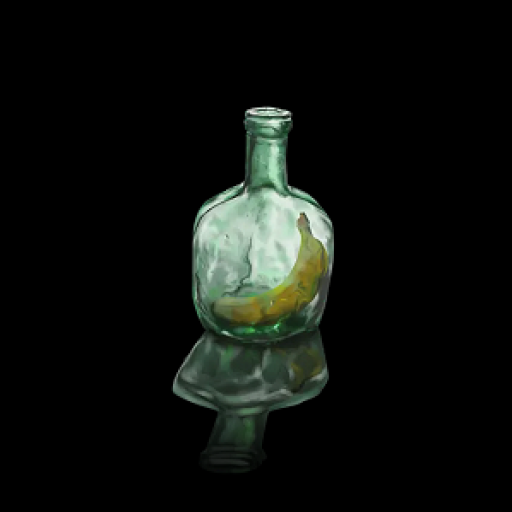
These books explore how our attempts to control life can leave us trapped—and how we can begin to let go. Together, they form the Monkeytraps Project, with different starting points for general readers, adult children of dysfunctional families, and therapists.
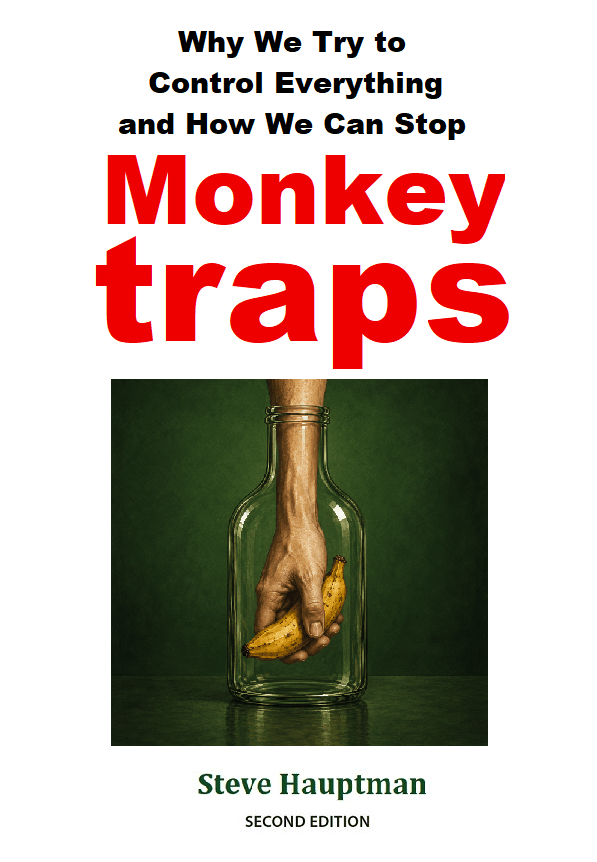
Monkeytraps: Why We Try to Control Everything and How We Can Stop
Monkeytraps explores the hidden psychology of control: the attempt to make people, emotions, situations, uncertainty, and even ourselves behave the way we believe they must in order for us to feel okay.
Drawing from psychotherapy, addiction, family systems, and everyday experience, the book examines how control can gradually become compulsive — narrowing life even as it promises safety and relief.
At the center of the book is the metaphor of the monkeytrap: a simple device that captures monkeys not through force, but through their inability to let go.
The Second Edition is coming soon.
Read the Introduction and first three chapters free, and subscribe to receive a publication announcement.
Explore the Second Edition
*
Coming next in the Monkeytraps series

Monkeytraps in Everyday Life
Forthcoming
This collection explores the many forms control can take in ordinary life: relationships, worry, perfectionism, resentment, approval-seeking, conflict avoidance, overthinking, caregiving, self-criticism, addiction, certainty-seeking, and more.
Each chapter examines a different monkeytrap — the emotional logic behind it, the relief it promises, the suffering it creates, and the possibility of letting go.
*
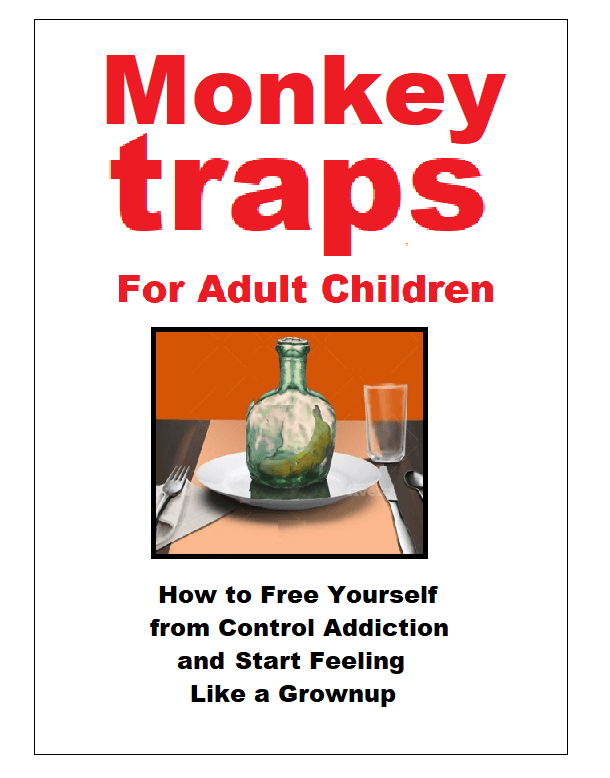
Monkeytraps for Adult Children
Forthcoming
This book explores the long afterlife of growing up in emotionally constricting, unpredictable, neglectful, controlling, or dysfunctional family systems.
Adult children often carry forward deeply ingrained strategies for managing anxiety, conflict, shame, uncertainty, and attachment — strategies that once protected them, but later become limiting and painful.
Monkeytraps for Adult Children examines how control operates within these inherited emotional patterns, and how healing may require not perfection or emotional self-control, but greater awareness, flexibility, responsibility, and intimacy.
*
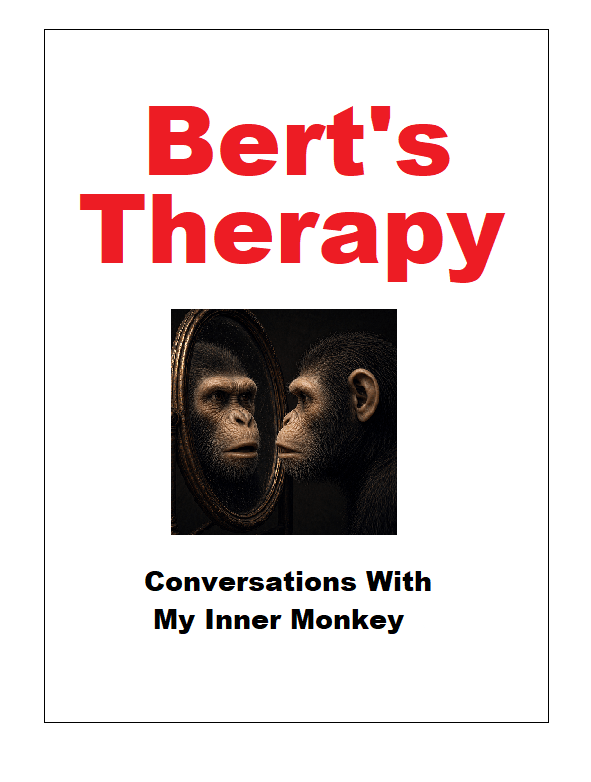
Bert’s Therapy
Forthcoming
Bert’s Therapy is an ongoing exploration of the controlling parts of ourselves through the evolving figure of Bert — an anxious, stubborn, frightened, funny, manipulative, vulnerable, deeply human “inner monkey.”
Through conversations, reflections, images, and symbolic encounters, Bert gradually becomes more than a metaphor. He becomes a way of exploring the emotional world beneath control: fear, longing, shame, loneliness, hope, defensiveness, and the desperate wish to feel safe.
Some of these pieces are humorous. Some painful. Some absurd. Much of Bert’s world lives somewhere in between.
*

Monkeytraps for Therapists
What happens when a therapist’s need for control enters the consulting room?
Monkeytraps for Therapists explores a problem therapists rarely discuss openly: how our own need to help, to be effective, and to feel competent can interfere with the very work we’re trying to do.
Through clinical stories, reflection, and practical interventions, the book examines how therapists get caught in the same controlling patterns they’re trying to help their clients escape—and how recognizing these traps can lead to more effective, flexible, and authentic therapeutic relationships.
Completed manuscript; seeking publication.
Explore Monkeytraps for Therapists →
*
These books are interconnected parts of an ongoing exploration of control, suffering, freedom, and emotional life. Together they form an evolving attempt to understand how human beings become trapped — and how we sometimes begin to let go.

